Childhood dementia & Sanfilippo

What is childhood dementia?

Childhood dementia is an umbrella term for severe, rare metabolic diseases in which children gradually lose learned skills and memories at a young age. The kinds of changes we associate with dementia or Alzheimer’s in older people happen to these children while they are still growing and developing.

One form of childhood dementia is Sanfilippo, a rare inherited condition. In Sanfilippo, the body’s cells cannot properly break down and clear away certain waste substances. These build up in the brain and other organs, causing brain function to decline.

Children like Muk often develop normally at first, but after a few years they begin to fall behind. Speech development stalls, movement skills decline, and daily activities such as walking, talking or eating independently become increasingly difficult. Eventually, they lose their independence completely. Behavioural problems, epilepsy and pain are also common.
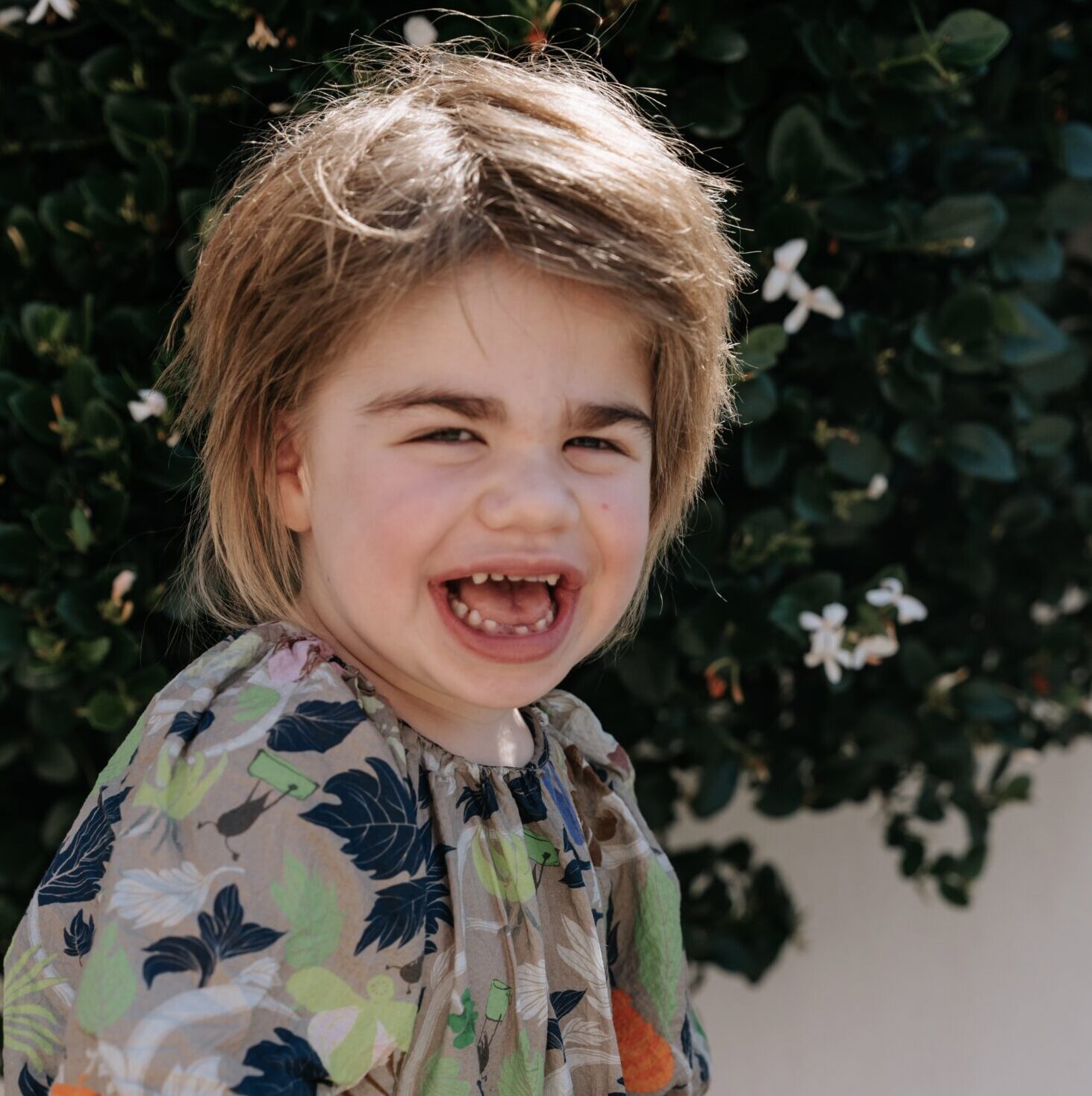
What makes childhood dementia especially heartbreaking is that it is irreversible and progressive: step by step, children lose more of who they were. Sadly, most children with Sanfilippo do not reach adulthood.

On 17 September 2026, the US FDA approved FAYUVI, formerly UX111. It is the first approved treatment for Sanfilippo type A. Long-term research data show that treated children can maintain important skills better than comparable children without treatment.

Through Stichting Muk tegen Kinderdementie, we are preparing to make treatment accessible for Muk. Whether and when she can be treated is still being assessed. Her disease does not stand still. That is why we are continuing to raise funds and explore options in America.

We also want to raise awareness of this heartbreaking disease and help accelerate research in the Netherlands and internationally where needed.

Want to know more? Read below about Sanfilippo and FAYUVI (UX111) treatment.

Sanfilippo type A

What happens in the body?

Sanfilippo type A is caused by a genetic defect that means the enzyme SGSH is missing. This enzyme is needed to break down certain sugars (heparan sulfate) in the body. Without it, these substances build up in cells, especially in the brain. This damages brain cells and causes brain function to decline further.

Without treatment, this causes a progressive, irreversible decline. Sadly, most children with Sanfilippo type A do not reach adulthood.

Why time matters

Sanfilippo is progressive and irreversible.

Because Sanfilippo is progressive, delays may allow the damage to increase. That is why we want to be ready if treatment becomes medically and practically possible.

Give Muk a future

Support Muk today and help bring her closer to possible access to a promising treatment.

Research and Hope

FAYUVI: a treatment that brings new hope

On 17 September 2026, the US FDA approved FAYUVI, formerly UX111. It is the first approved treatment for Sanfilippo type A, the form Muk has.

This one-time gene therapy helps cells produce the missing enzyme. In research, treated children maintained or developed important skills better than comparable children without treatment.

Whether and when Muk can be treated is still being assessed. Her disease does not stand still. That is why we are working on her medical preparation and continuing to raise funds to make treatment accessible for her.